A Business Owner’s Guide to Navigating Your Commercial Interior Renovation Budget
Whether it’s a salon, office, or retail environment, a well-designed commercial space sets the tone for your brand. But before materials are selected or walls are painted, it’s essential to establish a realistic, strategic budget. While interior designers don’t produce construction estimates, we do have extensive experience designing with budgets in mind. We use that knowledge to recommend finishes and solutions that align with your target investment, helping ensure the project stays within a realistic range long before contractor bids come in.

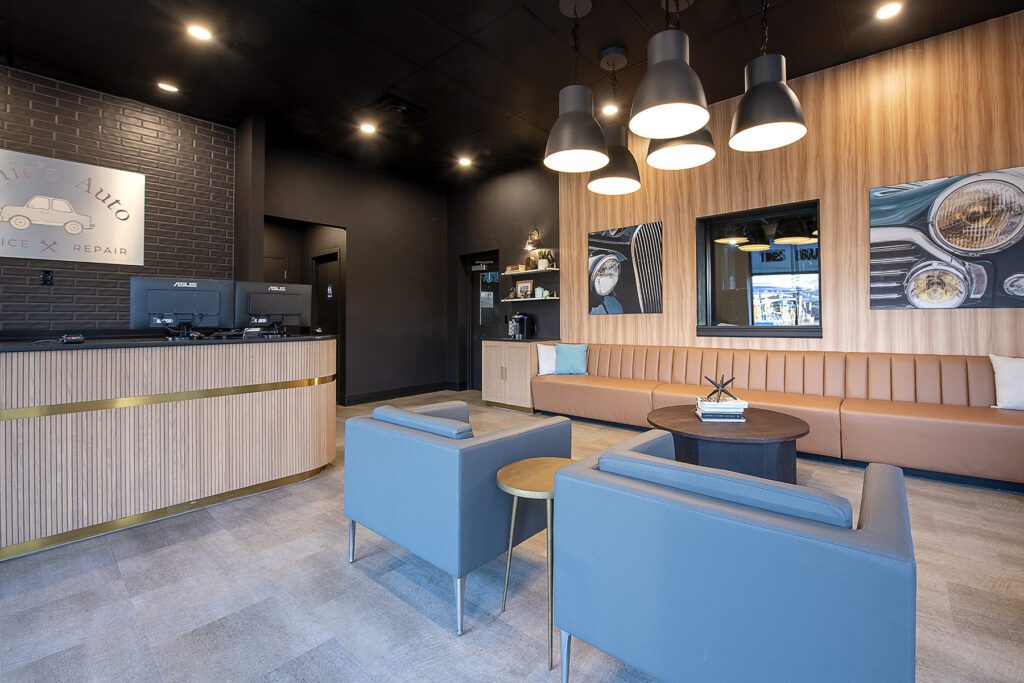
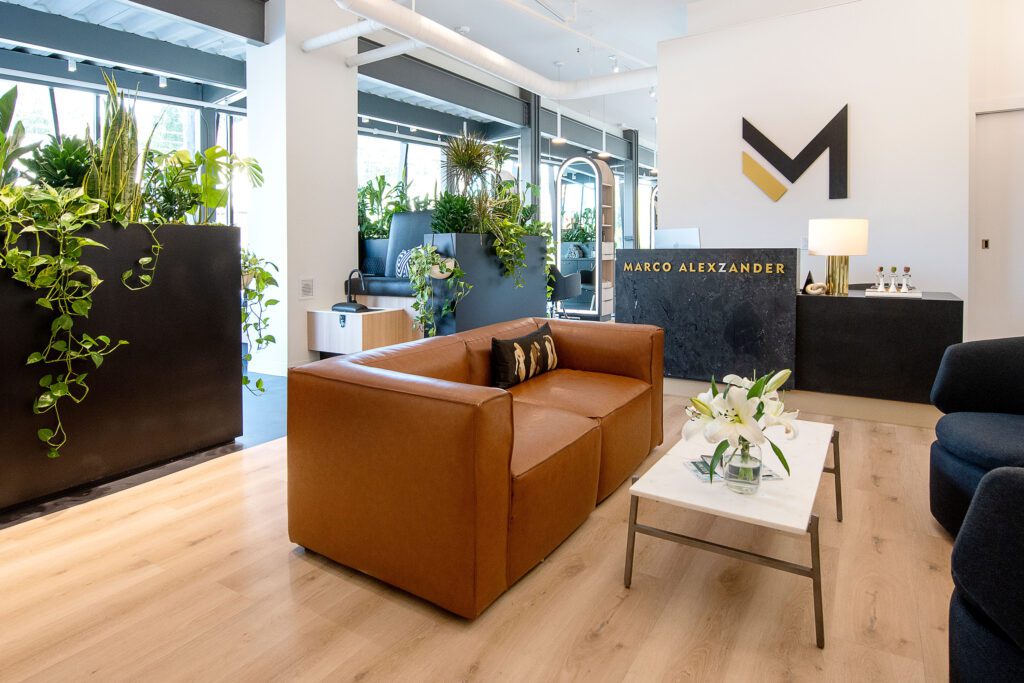
Interior designers can help you understand how your design goals align with what’s financially feasible, giving you a clear picture of your investment before the design is finalized and sent out to bid.
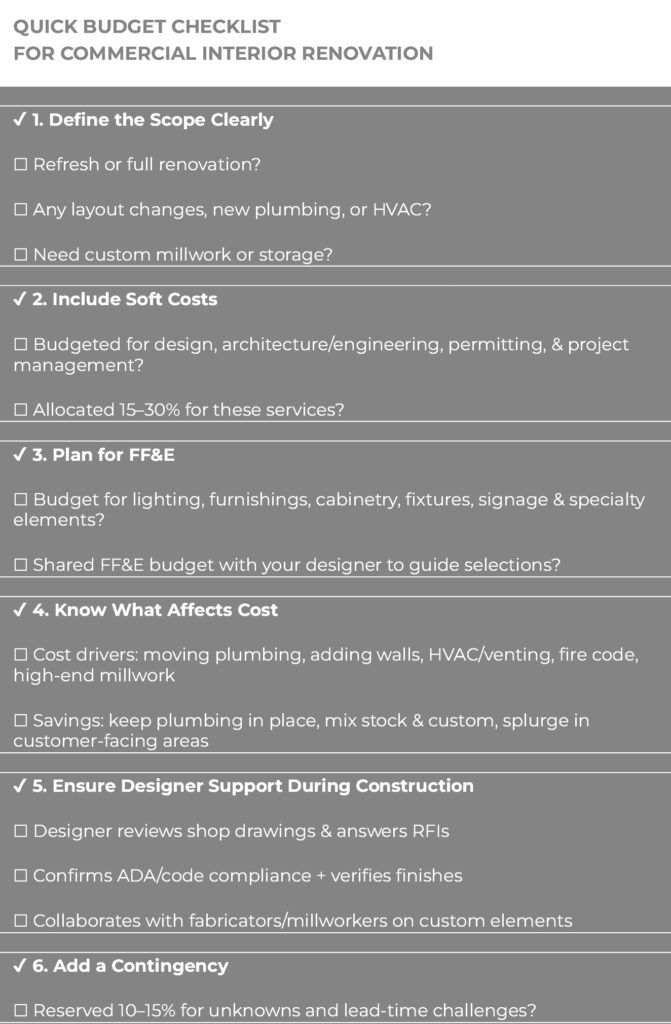
Here are tips to consider when budgeting for a commercial interior redesign. At the end, you’ll find a real-world case study that illustrates how these investment categories broke down line by line.
Tip #1: Understand the Scope
Budgets will vary significantly depending on the scale of work. Are you doing a light refresh or a full renovation? Do you need new infrastructure (walls, plumbing, HVAC), or just cosmetic updates? Layout changes, building code upgrades, and custom millwork can all quickly expand the scope and the cost. The scope is the most important item to figure out with confidence. For a nominal fee, we can walk a site and generate a space plan so that you can obtain early contractor pricing.
Tip #2: Factor in Soft Costs for Professional Fees
In addition to construction itself, your project may include design fees, architectural and engineering services, permitting, and project management. These soft costs often represent 15–30% of the total budget and are essential to keeping the project smooth and compliant.
Tip #3 Budget for FF&E (Furniture, Fixtures & Equipment)
FF&E plays a major role in both the form and function of your space. This is where your business branding shines. Costs can vary widely depending on your choices and we’re here to help guide you through the right ones to hit your budget. When clients openly share their budget line item for FF&E, we can help prioritize and balance your choices.
Tip #4 Understand What Drives Costs Up (and Down)
Key Cost Drivers Are:
- Moving plumbing (especially in salons/restrooms)
- HVAC/venting requirements (important for wellness and food spaces)
- Fire suppression + building code compliance
- High-end millwork or stone
How to keep these costs down:
- Keep plumbing in the same location
- Use stock millwork with custom accents
- Save splurge dollars for the customer-facing areas
Tip #5 Always Include a Contingency
Even well-planned projects can hit surprises. We recommend allocating 10–15% of your total budget for unforeseen costs such as building conditions, lead time challenges, or scope adjustments.
!! Tip #6 Hire a Designer That Stays Involved Through Construction (We have a lot of opinions on this last one) !!
Once the design is complete and the contractor begins work, many people assume the designer’s job is finished. In reality, the construction phase is where a designer becomes even more essential. This is the stage where your vision becomes built form and countless decisions must be reviewed, clarified, and approved to make sure the end result matches the intent.
A strong designer doesn’t disappear after drawings are issued. Instead, they remain actively involved in overseeing how the design is executed. Here’s what that looks like:
- Reviewing Shop Drawings for dimensions, material specifications, hardware details, how pieces join, function, and look in real space. This step protects your investment. Without it, expensive items can be built incorrectly and corrected at your cost.
- Responding to Contractor Questions (RFIs). During construction, the team may need clarifications on details, materials, or dimensions. These formal questions are called RFIs (Requests for Information). We respond quickly and clearly to prevent delays or costly misinterpretations. When designers answer RFIs directly, it eliminates guesswork on site and prevents changes you didn’t agree to.
- Verifying Finishes, Dimensions, and Code Requirements. Your designer ensures what’s delivered is not only beautiful, but safe, compliant, and functional. When designing we keep in mind, ADA accessibility, fire and electrical requirements, finish compatibility, correct placement and proportions of materials. Designers are trained to balance aesthetics with codes, durability, and user safety- something Pinterest inspiration can’t do.
- Collaborating with Fabricators and Millworkers. Custom elements such front desks, bar build-outs, shelving, reception counters, banquettes, and cabinetry require collaboration beyond drawings. We adjust construction details when needed, select joinery and edge profiles, approve mock-ups and material samples, and help troubleshoot material lead times or substitutions. Designers act as the bridge between concept and craftsmanship. Without that guidance, “custom” can quickly become “compromised.”
When a designer stays involved through construction, they protect your vision and your investment. Mistakes and rework often cost far more than design fees. Ongoing support ensures:
✔ Fewer change orders
✔ Fewer delays
✔ A space that looks and functions as intended



Case Study : Budget for Commercial Office Renovation
To give you a real-world view of how a commercial interior budget can break down, here’s a case study from a recent Slate Interiors project: a 3,000-square-foot office renovation in Northeast Ohio with mid-range finish level.
This project was a one-story renovation of an existing building. It included:
- Moving walls
- All new finishes
- Flooring
- Lighting
- Cabinetry
- HVAC and electrical work
- Specialty millwork
- Signage
Here’s how the numbers landed:
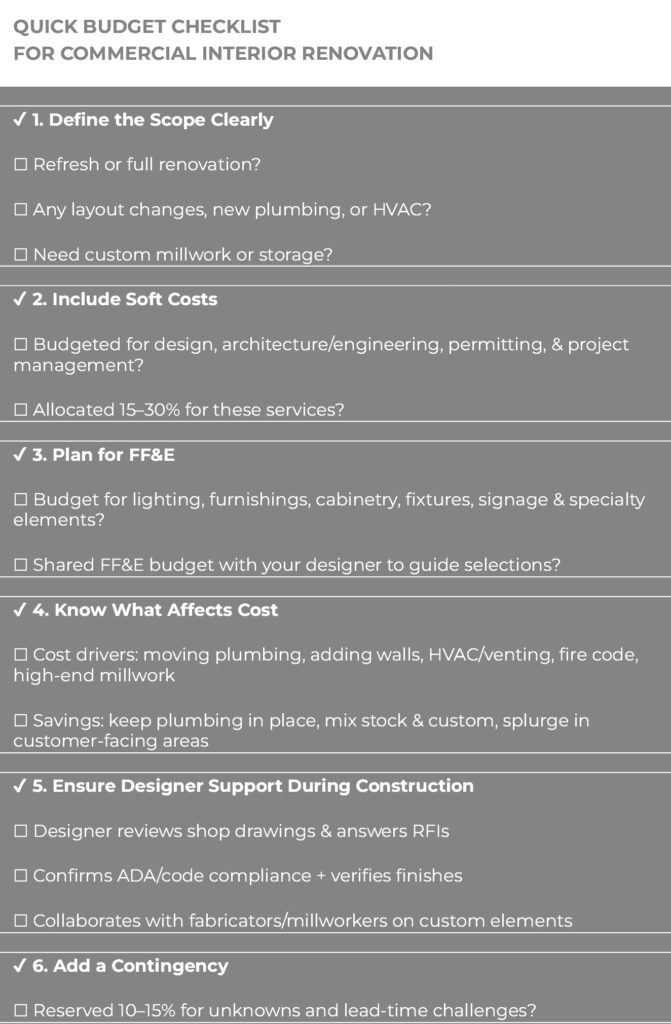
This office renovation demonstrates how a well-defined scope and early budget alignment create a smoother, more predictable project outcome. By understanding where costs were allocated, from infrastructure and building systems to finishes and specialty millwork, the client was able to make informed decisions at each stage and avoid unexpected overages. This real-world breakdown highlights the value of early planning and professional guidance, showing how thoughtful design coordination can turn a complex renovation into a controlled, strategic investment without surprises.
Final Thoughts
Every commercial interior project is unique, but a clear budget is essential for setting expectations. At Slate Interiors, we help clients define priorities, explore options, and make the most of their investment without unwanted surprises. We achieve this through our intimate knowledge with industry material costs and relationships with contractors that collaborate with us early on.


Ready to bring in an
interior design pro?
Let’s chat >
we’ll help you plan the
perfect time and approach
for your project.